
Project Based Learning in Year 11 and 12
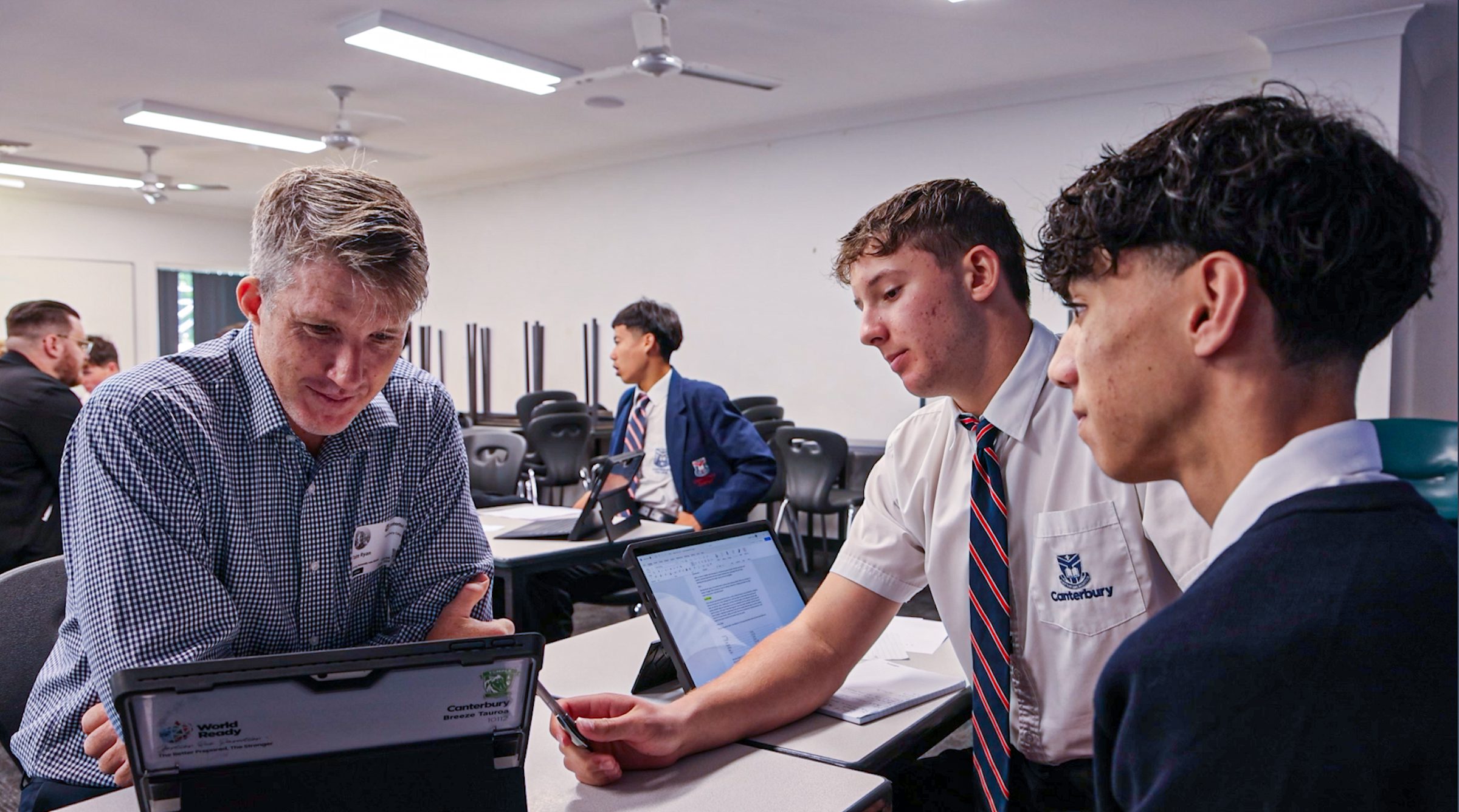

Coming from a broad educational background encompassing commerce, psychology, history and education, Kate has worked as a curriculum and pedagogy coach, building teacher capacity to understand and embed evidence based best practice on teacher effectiveness and student wellbeing. At Future Anything, Kate uses her experience in creative learning design to build teacher knowledge and confidence, working alongside schools and educators to design innovative learning experiences for their young people that connect the classroom to the world beyond the school gate.
Project Based Learning (PBL) is gaining momentum in Australia, as educators recognise the benefits of moving away from traditional teaching methods to create more meaningful and engaging learning experiences for their students.
But a common objection we hear here at Future Anything is “Well, that’s fine in Primary or Lower Secondary, but it doesn’t work with the Senior Years”.
Many of the schools we work with across Australia have amazing PBL programs in Years 7-9, but once students hit Year 10, their teaching reverts to more traditional approaches to tackle a packed curriculum.
Yet here at Future Anything we know that Gold Standard PBL aligns to standards, and offers immersive and authentic learning that helps students develop the skills that matter most!
For us, Project Based Learning will always have a home in the senior years.
What is Gold Standard PBL?
According to PBL Works, Project Based Learning (PBL) is “a teaching method in which students gain knowledge and skills by working for an extended period of time to investigate and respond to an authentic, engaging, and complex question, problem, or challenge.”
At Future Anything, we reference the PBL Works model for Gold Standard PBL, which encompasses two useful guides for educators:
1) Seven Essential Project Design Elements provide a framework for developing high quality projects for your classroom, and
2) Seven Project Based Teaching Practices help teachers, schools, and organisations improve, calibrate, and assess their practice.


In our conversations with schools, aligning to standards is an aspect of PBL that is a source of frequent vexation for educators.
This is why we make sure that The Future Anything Challenge (our Term- or Semester-long enterprise thinking program that challenges young people to come up with innovative ideas that make their world a better place) has clear alignment to curriculum.
Each of our Activate curriculum streams can be clearly mapped to a variety of standards, with sample assessments and rubrics provided, as well as learning goals and success criteria for every learning block.
Still not sure how PBL works in the Senior Years?
OK then, let’s get down to some concrete examples.
Here I’ve outlined some examples of how our Activate streams align directly with Senior curriculum in a variety of systems:
- The Future Anything Challenge: Technology X – in Business Innovation (SACE – South Australia)
Newly introduced in 2023, Future Anything’s Technology X stream gives students the challenge: “As an entrepreneur, pitch your prototype of an innovative solution that uses technology to make the world a better place.”
This stream is a great fit for a variety of subject areas, from Science, Humanities & Social Sciences, Design & Digital Technology & STEM).
One of our partner schools in South Australia is adapting Tech X to explore Year 12 Business Innovation. The unit helps students ‘consider the opportunities and challenges associated with start-up and existing businesses, and consider how digital and emerging technologies may present opportunities to enhance business models’ (Business Innovation – SACE).
- The Future Anything Challenge: Start Up Enterprise – in General Business (Queensland)
Start Up Enterprise Stream is our top-level enterprise stream, designed to take students from an idea through to a business that has been validated in-market. The unit is mapped to Business (General) 2019 in Queensland, and covers a variety of content from the course.
This can be an excellent option for a Year 10 introductory course, as it unlocks key topics including differentiation, innovation, and finance, as well as practicing tools such as SWOT and USP Analysis, all while delivering an innovative and authentic student project.
Start Up Enterprise can also sit in the Year 11/12 space, with a natural fit in Unit 1 Topic 2, Creation of business ideas. We provide example assessments and scaffolding to fit the Business Report assessment type, allowing educators to implement Gold Standard PBL while meeting those all-important curriculum objectives. See the sample scaffolding document here.
- The Future Anything Challenge: Social Enterprise – in the International Baccalaureate
‘Social enterprise’ is a buzz phrase that has permeated the International Baccalaureate space, with the new Business Management syllabus introducing an additional HL external assessment based on an authentic social enterprise.
To best prepare students for this challenge, two Future Anything schools have introduced the Social Enterprise stream into their Year 10 or 11 preparatory courses.
Students not only get an authentic experience of ideating, prototyping and pitching a social enterprise (one that solves a real world problem that matters to them), but they also cover relevant curriculum from Unit 1, 4, and 5, and practice several of the tools in the Business Management Toolkit.
- The Future Anything Challenge: Start Up Enterprise – in Business Studies (Applied) 2024 Queensland
We have recently been working alongside a Queensland school to co-design and develop assessment examples that align to the upcoming Entrepreneurship unit added to the Queensland Applied Business Studies (2024).
Together, we mapped the The Future Anything Challenge: Start Up stream across both topics in the incoming unit, and provided support to develop an authentic case study for Assessment F1. Students will complete a pitch of an innovative product or service that they have validated in-market for Assessment F2.
What do we gain by switching up our approach in the Senior Years?
While curriculum alignment is essential for educators, we also know that big changes are ahead for Australian schools, with louder calls for ATARs to be scrapped and new strategies emerging to assess and measure what our young people know and can do.
One of the biggest benefits of project-based pedagogy is its ability to enhance the skills students need for the rapidly changing world of work; future capabilities like collaboration, creativity and innovation, and adaptive mindset, that move beyond the rigidity of the ATAR system.
By bringing engaging learning experiences into your senior classroom, educators can develop the best of both worlds, meeting the needs of your school and system while helping our young people thrive in the emerging future of work.
Want to find out more about how to introduce innovative, student focussed Project Based Learning into your senior years classroom
Click here to learn more and to register your school for The Future Anything Challenge.
Check out The Future Anything Challenge.