
Research and Frameworks


Since 2018, Future Anything has led professional learning with more than 16,000 educators across Australia and New Zealand, impacting the learning of more than 1 million students.
Whether it's our work in Pedagogy and Learning Design or Personal and Leadership Development, our Frameworks are backed by research, and reflect best practice in education and industry globally.
Our Approach to Pedagogy
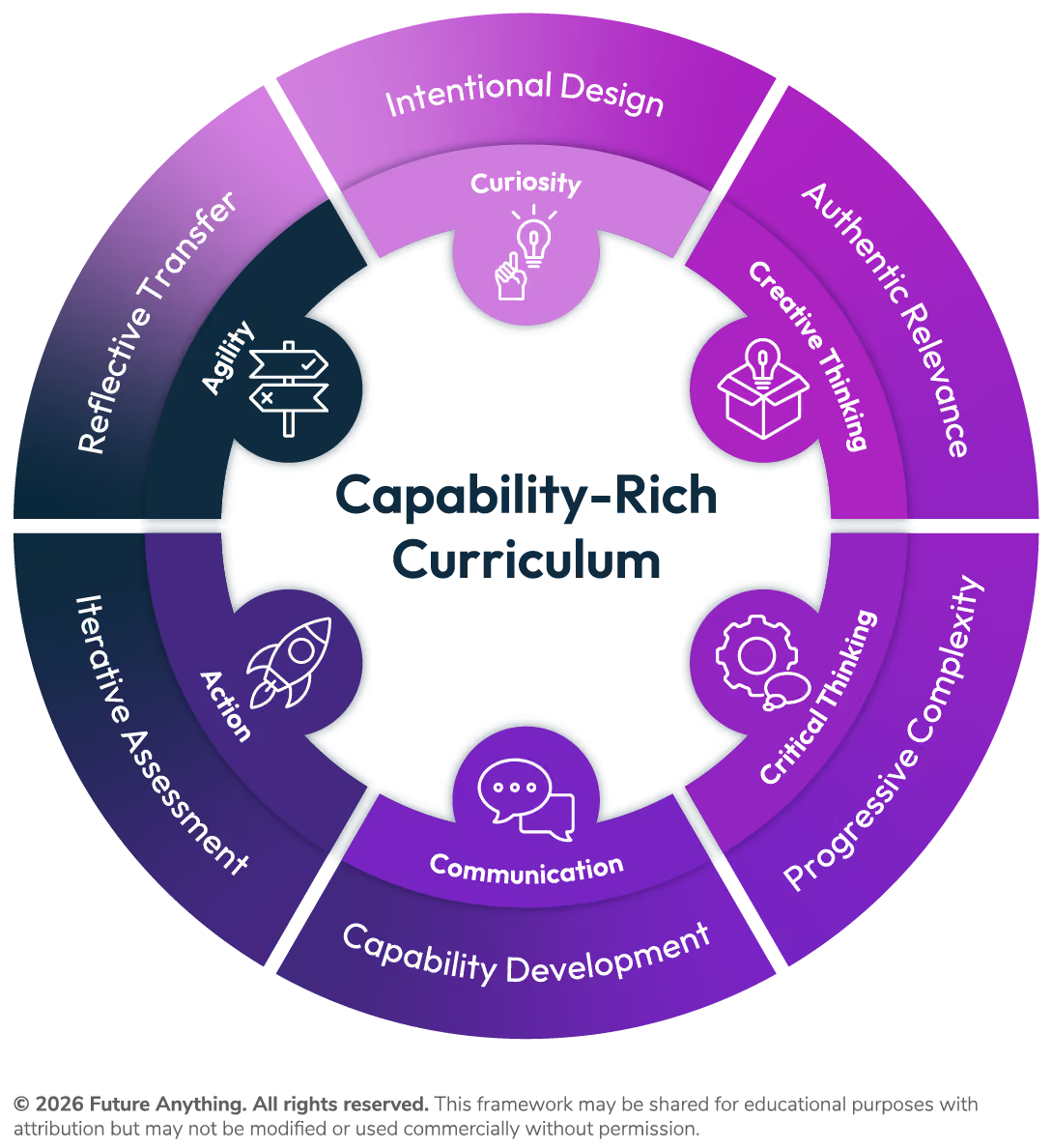
Our pedagogical approach to Capability-Rich Curriculum sits at the convergence of human-centred design thinking, entrepreneurial pedagogy, and project-based learning.
Central to this approach is the Future Anything Capability Framework, which deliberately embeds the development of curiosity, creative thinking, critical thinking, communication, action and agility into the design of learning itself.
This approach is informed by research across cognitive science and evidence-based strategies to ensure students build deep knowledge, and transfer learning beyond the classroom —building the confidence, capability and agency of young people to bend the future, one idea at a time.
Pedagogical Drivers
Intentional Design
Learning is planned with the end in mind. Drawing on Understanding by Design (UbD), we identify the knowledge, skills and evidence of learning first, then design the sequence of experiences that will deliberately build towards them.
In practice, this means we:
- Unpack curriculum to identify the assessable outcomes
- Identify key learning intentions and success criteria
- Backward map learning across a unit plan
Authentic Relevance
Learning is anchored in a compelling purpose that connects curriculum to the real world. Drawing on Gold Standard PBL, we frame units around meaningful questions and authentic contexts that give students a reason to care.
In practice, this means we:
- Frame each unit with a rigorous driving question
- Weave real-world links, case studies, experts or contexts throughout the learning
- Launch the unit with an inciting incident that sparks curiosity and connection
Progressive Complexity
Learning builds in deliberate phases, increasing cognitive demand from surface knowledge to deep understanding and transfer. Informed by gradual release of responsibility, complexity is scaffolded so challenge rises as independence grows.
In practice, this means we:
- Sequence learning from surface to deep to transfer
- Increase cognitive demand while maintaining a culture of safety and high expectations through ‘seeding success’
- Explicitly build in ‘productive friction’; creating space for stretch and growth
Capability Development
Transferable capabilities are deliberately targeted and developed through the Future Anything Capability Framework. Drawing on entrepreneurial pedagogy, capabilities are explicitly taught, practised and reflected upon so growth becomes visible.
In practice, this means we:
- A target capability is selected that aligns to the unit outcomes
- Weekly micro-challenges are embedded that deliberately strengthen the target capability
- Students collect evidence of growth to support students to reflect on their development
Iterative Assessment
Assessment is designed as Authentic Mixed Method Assessment (AMMA): a cycle that synthesises multiple forms of evidence to inform learning and improvement in real time. Students prototype, receive structured critique and refine their work through sustained iteration rather than one-off submission.
In practice, this means we:
- Design authentic, mixed-method assessment tasks that blend performance, interview, rubrics and other evidence sources
- Build multiple feedback loops and iterations of major work (e.g., at least three refinements)
- Use portfolio “learning peaks” to progressively increase complexity across the unit
Reflective Transfer
Learning culminates in a public celebration of learning. Informed by Gold Standard PBL, sharing work with an authentic audience increases ownership and strengthens the quality of final performance. Reflection is deliberately woven throughout the learning journey and made explicit at its conclusion. Research into metacognition and transfer shows that students are more likely to retain and apply learning when they analyse what worked, what didn’t, what they would do differently and why it matters beyond the task.
In practice, this means we:
- Design assessment for a public showcase or authentic audience
- Embed structured reflection checkpoints across the unit and explicitly at the end
- Guide students to articulate how their learning transfers to future study and life
Future Anything Capability Framework
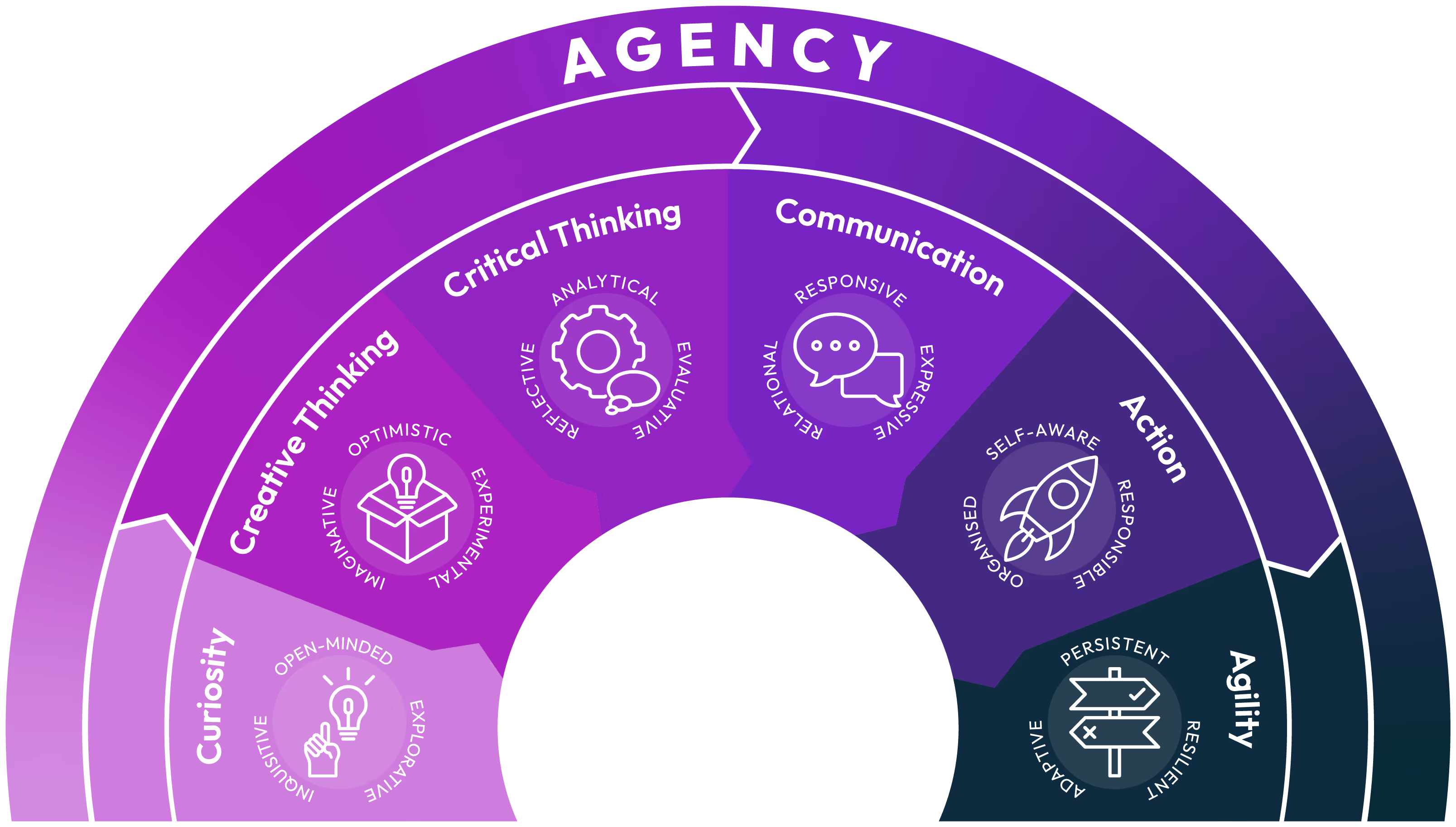
Over the past five years, Future Anything has worked alongside educators, researchers, students, and system leaders to design a research-informed framework that puts agency at the heart of teaching and learning.
The Future Anything Capability Framework identifies six key capabilities that empower young people to bend the future—rather than just inherit it. Each capability also consists of three measurable competencies that students can develop over time, through scaffolded opportunities to ‘practice’ within their curriculum.
Schools working with Future Anything use our Capability Framework to:
- Guide school-wide strategy through staged multi-year implementation plans
- Map curriculum and identify target capabilities for each unit of work or phase of learning
- Engage staff in professional learning to build shared language and pedagogical alignment – you can't have confident teachers, without investing in professional development
- Use our student-friendly measurement tools to build a whole-school approach to learner profiles
- Build capability micro-credentials and learner portfolios to make capability development visible
Capability Suite
Curiosity
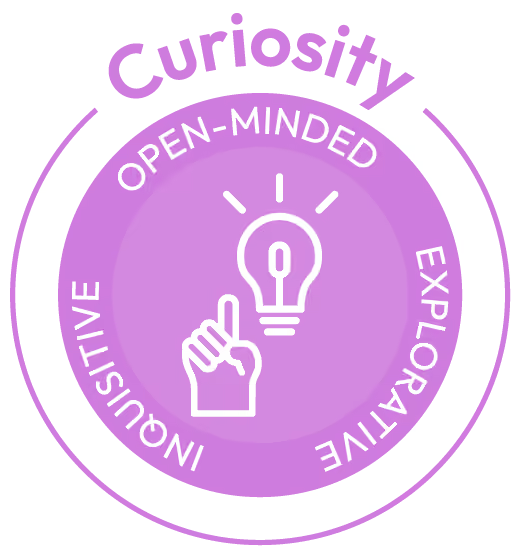
Curiosity is the drive to explore, ask questions, and seek new understanding about the world around us.
Competencies include:
- Inquisitive: Asking questions to engage in discussions and clarify understanding.
- Open-Minded: Exploring diverse perspectives and challenging assumptions.
- Explorative: Seeking out new knowledge independently, across varied contexts.
Anchor Research: Facilitating Creativity by Regulating Curiosity
Creative Thinking
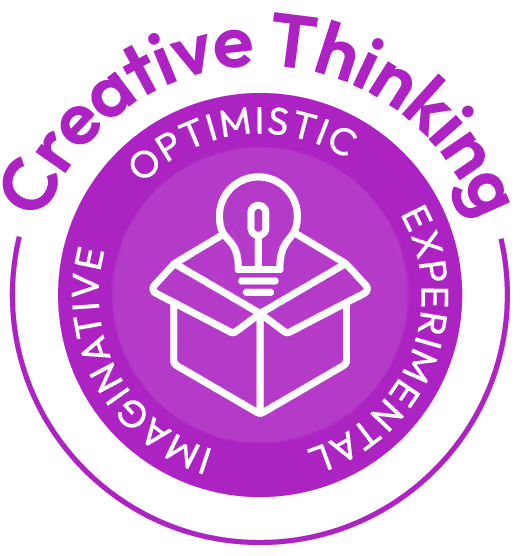
Creative Thinking is the ability to generate, refine, and apply novel ideas in meaningful ways.
Competencies include:
- Imaginative: Generating bold, original, or unusual ideas.
- Optimistic: Iterating on ideas and staying open to solutions—even in the face of failure.
- Experimental: Testing and refining ideas through trial, error, and feedback.
Anchor Research: Defining Creativity
Critical Thinking
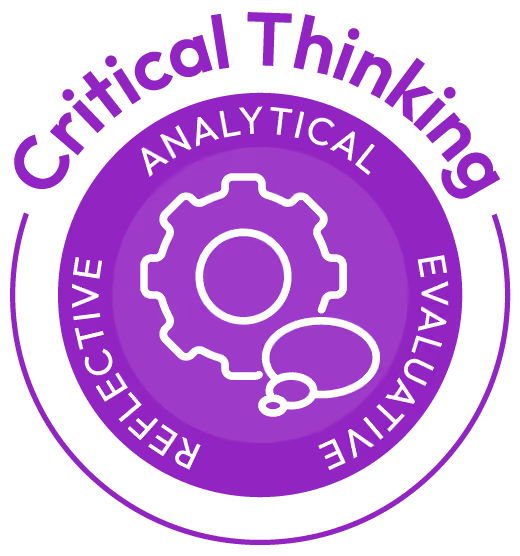
Critical Thinking is the process of analysing, evaluating, and synthesising information to make reasoned judgments.
Competencies include:
- Reflective: Drawing on knowledge and experience to guide decisions.
- Analytical: Identifying patterns, evaluating sources, and assessing relevance.
- Evaluative: Applying criteria to make well-informed and defensible conclusions.
Anchor Research: Teaching Critical Thinking and Why it Matters
Communication
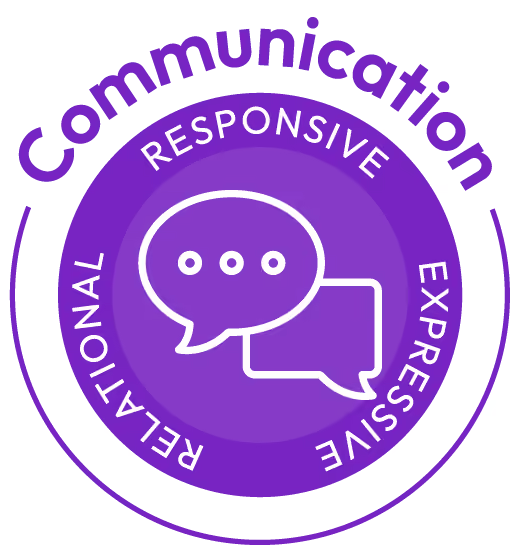
Communication is the ability to express ideas clearly, listen actively, and engage in meaningful dialogue across diverse contexts.
Competencies include:
- Expressive: Articulating thoughts and ideas through a range of formats and media.
- Responsive: Adapting communication for different audiences and supporting inclusive dialogue.
- Relational: Collaborating effectively and recognising the strengths of others.
Anchor Research: Communicative Competence
Action
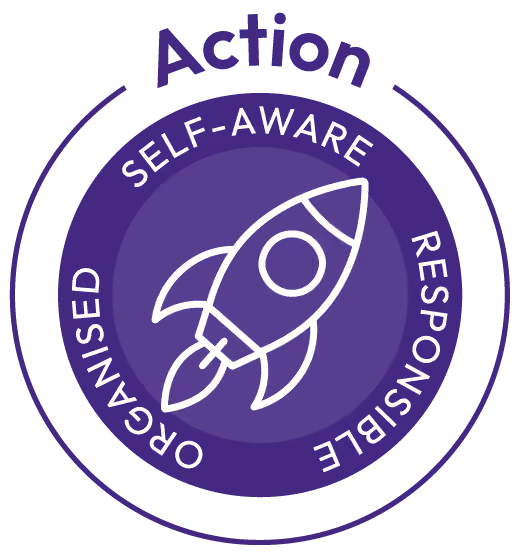
Action is the ability to take initiative, set goals, and follow through on tasks to make things happen.
Competencies include:
- Organised: Using tools, strategies, and systems to structure work and manage time.
- Self-Aware: Recognising personal limits, asking for help, and balancing roles in a group.
- Responsible: Setting goals, showing initiative, and following through without prompting.
Anchor Research: Project management education: The human skills imperative
Agility
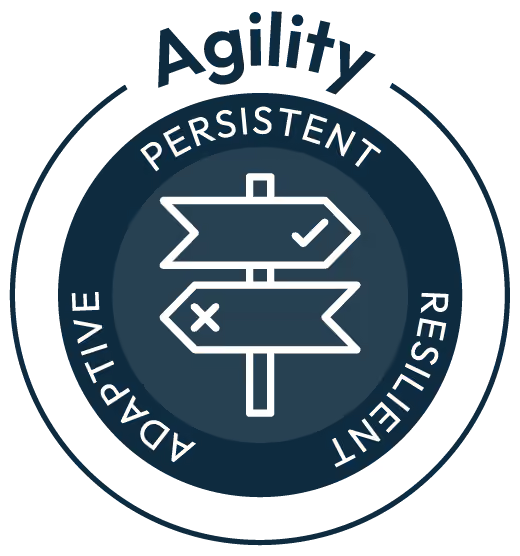
Agility is the ability to adapt, persist, and stay resourceful in the face of change or challenges.
Competencies include:
- Resilient: Staying calm under pressure and learning from mistakes.
- Persistent: Continuing to take action—even when things feel difficult or uncertain.
- Adaptive: Changing strategies and applying feedback to improve.
Anchor Research: Adaptive Intelligence: Its Nature and Implications for Education
Our Approach to Leadership
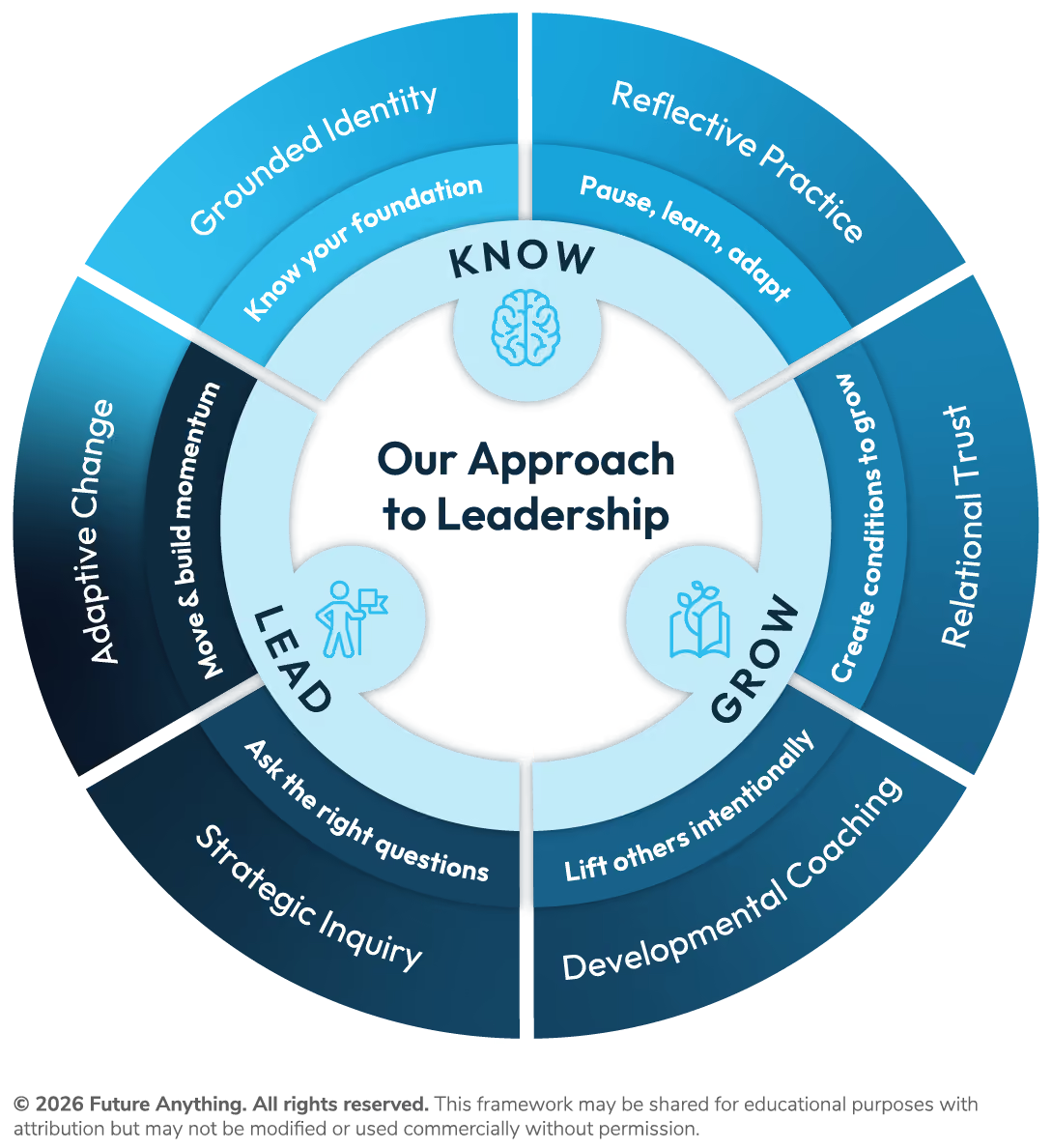
At Future Anything, through decades of personal experience and years working alongside schools across Australia, one thing has become increasingly clear: if we want lasting improvement in schools, we need to invest in the people who make improvement happen every day.
Many leadership frameworks describe what good leaders do. Our Approach to Leadership focuses on how leaders grow.
It recognises that sustainable leadership starts with self, expands through others, and ultimately shapes the wider organisation. That's why our approach is intentionally organised around three simple stages.
Know: Build the self-awareness and habits that underpin effective leadership.
Grow: Create the conditions for others to succeed through trust, coaching and strong professional relationships.
Lead: Turn ideas into sustainable improvement through inquiry, evidence and adaptive change.
Each stage is supported by two interconnected drivers, giving leaders a practical language for understanding, developing and applying leadership in their everyday work.
Drivers
Know — Leadership starts with self.
Grounded Identity
Effective leadership starts with knowing yourself. Grounded Identity explores the values, beliefs and sense of purpose that shape how you lead, helping you build the clarity and consistency that earns credibility with others. Drawing on Goleman's work on emotional intelligence and Heifetz's writing on adaptive leadership, this driver anchors decision-making.
Anchor Research: Middle Leadership and Social Emotional Intelligence: A Scoping Review and Empirical Exploration (2025)
Reflective Practice
The best leaders don't simply have more experience. They learn more from it. Reflective Practice develops the discipline of seeking feedback, reflecting deliberately and continually adapting your leadership. Drawing on Schön's concept of the reflective practitioner and Kegan's research on adult development, this driver builds the metacognitive habits that make improvement sustainable rather than episodic.
Anchor Research: Leading Reflective Practice – Reviewing the Evidence, Campbell, C. & Ceau, M. (2023)
Grow — Leadership grows though others.
Relational Trust
High-performing teams are built on trust. Relational Trust helps leaders create psychologically safe environments where people feel confident to contribute ideas, challenge thinking and learn together. Drawing on Bryk and Schneider's research on trust in schools and Edmondson's work on psychological safety, this driver gives leaders the tools to build teams where genuine collaboration is possible.
Anchor Research: Trust in Schools: A Core Resource for School Reform, Bryk, A.S. & Schneider, B. (2003)
Developmental Coaching
The shift from managing to coaching is one of the most significant transitions a middle leader makes. Developmental Coaching develops the skills to ask purposeful questions, provide meaningful feedback and grow the capability of others. Drawing on Robinson's instructional leadership research and Hattie and Timperley's work on feedback as a lever for learning, this driver equips leaders to have conversations that leave colleagues more capable, not just more informed.
Anchor Research: School Leadership and Student Outcomes: Identifying What Works and Why, Robinson, V., Hohepa, M. & Lloyd, C. (2009)
Lead — Leadership is made real in action.
Strategic Inquiry
Sustainable improvement begins with understanding the right problem. Strategic Inquiry helps leaders investigate challenges, gather evidence and design thoughtful, evidence-informed responses. Drawing on Timperley's inquiry and knowledge-building cycle and Bryk's work on improvement science, this driver builds the habits of thought that make leaders confident problem-finders, not just problem-solvers.
Anchor Research: Using Evidence in the Classroom for Professional Learning, Timperley, H. (2008)
Adaptive Change
Ideas are easy. Implementation is hard. Adaptive Change develops the capability to build momentum, navigate resistance and change fatigue, and sustain improvement over time. Drawing on Fullan's work on the change process in education, Kotter's model for leading change, and Fixsen's implementation science, this driver equips leaders with practical tools for making good ideas actually land.
Anchor Research: The Change Leader, Fullan, M. (2002)
Want to bring our Frameworks to your school?
Download our Teacher Professional Development brochure. It has everything you need to support learning, leadership and strategy in your school.